
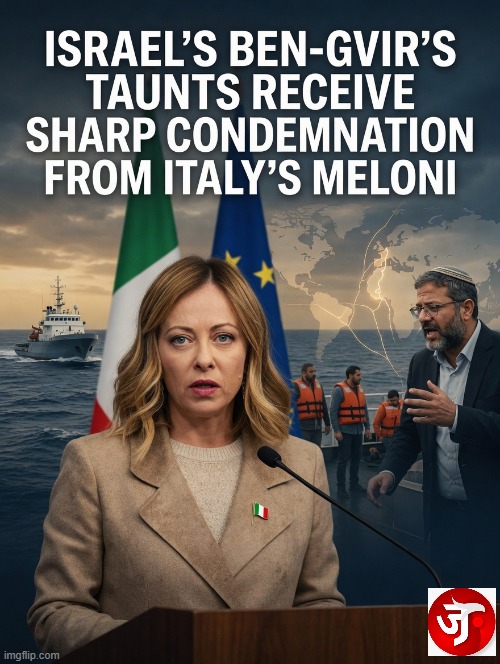
In a striking display of diplomatic resolve, Italian Prime Minister Giorgia Meloni and Foreign Minister Antonio Tajani issued a joint statement condemning the treatment of Gaza-bound flotilla activists detained by Israeli forces. Labeling the images “unacceptable” and a violation of human dignity, Meloni summoned Israel’s ambassador in Rome for explanations, demanded an immediate apology, and called for the swift release of the Italian citizens among the group.
The incident stems from Israel’s interception of the Global Sumud Flotilla (a convoy of 50 vessels attempting to deliver aid and challenge the Gaza naval blockade) in international waters earlier this week. Israeli forces detained approximately 430 activists, including citizens from Italy (22–29), Spain, France, and other countries. The activists were brought to Ashdod port for processing.
The catalyst was footage posted by Israel’s far-right National Security Minister Itamar Ben-Gvir on May 20, 2026. At Ashdod port, where activists from the Global Sumud Flotilla were held after their vessels were intercepted in international waters, Ben-Gvir approached bound detainees, some kneeling or forced into humiliating positions with hands zip-tied behind their backs. He posted those videos on social media showing himself at the port among the restrained detainees (handcuffed, kneeling or pinned on the deck). In the footage, he waved an Israeli flag, played the national anthem, and taunted them with comments such as “Welcome to Israel. We’re the landlords” and suggestions that they should remain imprisoned “for a long, long time.” Videos circulating on X showed Ben-Gvir and associates visibly gloating.
The flotilla, carrying humanitarian aid like food and medicine intended for Gaza, was seized by the Israeli navy. Israel maintains the blockade is essential to prevent weapons reaching Hamas, responsible for the October 7, 2023, attacks and ongoing rocket fire. Critics, including the activists, argue the interception occurred in international waters and that the mission was purely humanitarian, echoing past flotilla controversies like the 2010 Mavi Marmara incident.
Ben-Gvir’s stunt drew swift international backlash. Several nations, including France, Canada, Spain, and the Netherlands, summoned Israeli ambassadors. Even within Israel, Prime Minister Benjamin Netanyahu distanced himself, stating the actions were “not in line with Israel’s values and norms” and ordering swift deportations amid domestic criticism. Ben-Gvir, however, doubled down, framing it as tough policy toward “Hamas supporters.”
This episode is not an isolated provocation but emblematic of Ben-Gvir’s long record of radical rhetoric and actions toward Palestinians. A self-described follower of the late extremist Rabbi Meir Kahane, Ben-Gvir has a history of convictions for incitement to racism and supporting a terrorist organization. He has openly chanted “Death to Arabs,” displayed a portrait of Baruch Goldstein (the 1994 Hebron massacre perpetrator) in his home, and advocated expelling “disloyal” Arab citizens. As National Security Minister, he has pushed policies like banning Palestinian flags, expanding settlements, and supporting harsher prison conditions where allegations of widespread abuse, including torture, have surfaced under his oversight. His repeated provocative visits to the Temple Mount/Haram al-Sharif have inflamed tensions.
Such behavior mirrors a broader pattern of ill-treatment that critics say dehumanizes Palestinians. Public mockery of international activists, as seen in the flotilla videos, raises uncomfortable questions: if this is how foreigners are treated on camera, what happens to Palestinians in detention or under occupation behind closed doors? Reports from human rights groups document settler violence in the West Bank, home demolitions, and restrictions that Ben-Gvir has championed.
While Israel faces genuine security threats from Hamas and other militants, these tactics risk eroding moral legitimacy and fueling cycles of resentment. Compounding the silence around these dynamics is the under-discussed use of white phosphorus in populated areas. Human Rights Watch and Amnesty International have repeatedly documented Israeli forces employing this incendiary substance in Gaza and southern Lebanon, including recent incidents where shells landed near civilians and farmland, such as farmers harvesting in Lebanon, where plumes of smoke rose over fields and roads. White phosphorus, which can cause horrific chemical burns and lifelong suffering, is not banned outright but is illegal under international humanitarian law when used indiscriminately in civilian zones, as it violates principles of distinction and proportionality. Israel maintains it is used only for smoke screens or marking, denying deliberate targeting of civilians, yet verified footage and investigations paint a pattern of deployment in residential and agricultural areas with devastating effects on non-combatants.
In the din of geopolitical outrage over the flotilla taunt, these quieter horrors, white phosphorus’s lingering scars on Gaza’s soil and Lebanon’s fields, receive less sustained attention. Yet they underscore the human cost that extends far beyond any single video.
Meloni’s firm response cuts through the noise. As one of Europe’s more Israel-friendly leaders, her insistence on dignity and accountability signals that even allies will not overlook excesses. In a conflict where both sides claim existential stakes, Israel’s security against terrorism, Palestinians’ quest for statehood and rights, dehumanizing gestures like Ben-Gvir’s only harden divisions. Netanyahu’s rebuke hints at internal recognition that such radicalism harms Israel’s standing, but is it only that?
Recently, Giorgia Meloni, the Prime Minister of Italy, has been in the news for several reasons: At the G7 Summit, she had an eye-rolling reaction to French President Emmanuel Macron, which went viral on social media. She made headlines with her powerful speech at the White House, where she stated, “Something has changed,” addressing Europe’s future and transatlantic ties, and now, Meloni’s comments at the UN General Assembly regarding Israel’s actions in Gaza were also significant, where she condemned the violence and called for some EU sanctions against Israel are stirring reactions.
Is a diplomatic fallout widening as Europe is also reshaping its economic policy and values?