
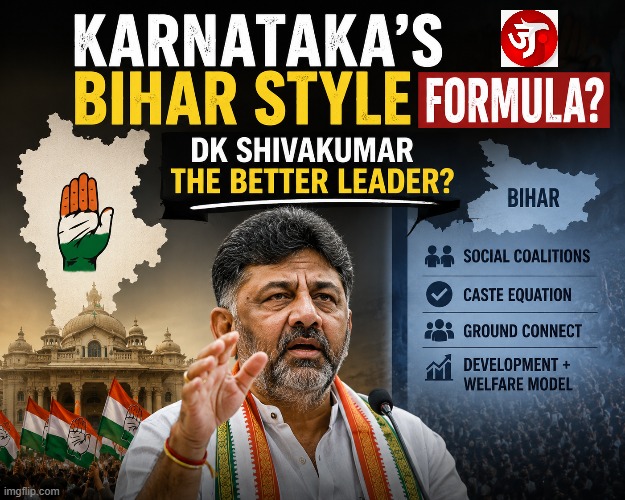
This is the latest development in Karnataka’s internal Congress power tussle is quite interesting.
Last night, Chief Minister Siddaramaiah traveled from Delhi to Bengaluru due to a late afternoon meeting with Congress chief leaders. It appeared that the long-running power struggle within Karnataka Congress is now nearing a resolution. With high command meetings in Delhi (involving Siddaramaiah, Shivakumar, Rahul Gandhi, etc.) it all pointed towards a leadership change.
Let’s take a look at the background of this: Since Congress formed the government in Karnataka in 2023 under Siddaramaiah (with DK Shivakumar as Deputy CM), there has been ongoing talk of a power-sharing formula where Siddaramaiah would serve as CM for the first 2.5 years, after which Shivakumar would take over. But this never happened and frictions grew grittier. His son, Dr. Yathindra Siddaramaiah, gets a minister post in the new cabinet.
Shivakumar becomes the new Chief Minister and may vacate the Karnataka Congress President post (possibly to Satish Jarkiholi, a Siddaramaiah loyalist).
This mirrors the recent Bihar arrangement where Nitish Kumar moved to Rajya Sabha, his son got a ministerial berth, and Samrat Choudhary became CM.As of 27 May 2026,. Siddaramaiah has reportedly been offered the Rajya Sabha route but hasn’t given final consent yet.
Why Was It So Necessary For Leadership Change?
DK Shivakumar’s leadership prowess compared to Siddaramaiah is far from straightforward; opinions on who is “better” depend on factors like mass appeal, governance credentials, organizational capabilities, caste dynamics, and future electoral potential. Supporters within the Congress high command believe Shivakumar is the ideal candidate to steer the party toward success in upcoming elections, especially as the 2028 horizon looms. However, this perspective is highly subjective and fiercely debated.
Revered as Congress’ “troubleshooter,” Shivakumar has established himself as an essential organizer in Karnataka. As the president of the Karnataka Pradesh Congress Committee (KPCC), he has been instrumental in rejuvenating the party after significant setbacks from 2019 to 2023, effectively managing resources and energizing grassroots operations that led to the 2023 victory. His financial backing of rallies and strategic campaign execution showcases his commitment to keeping the party’s electoral machine relentlessly active.
Shivakumar commands a substantial base among the Vokkaliga community, influential in the Old Mysore region. His ascent is seen as a strategic move to fortify Congress’ hold on dominant castes while Siddaramaiah appeals to AHINDA (Backward Classes, SC/ST, Minorities), thereby ensuring a balanced approach and diminishing reliance on a singular leader.
At approximately 63–65 years old, compared to Siddaramaiah’s 80+, Shivakumar embodies the vigor and dynamism that many believe is essential for navigating the political landscape leading to 2028. Congress leadership is reportedly keen on promoting a younger face to mitigate potential anti-incumbency sentiments and galvanize support for future campaigns.
Shivakumar is not only adept at financial and logistical planning but also maintains robust ties with key figures like Sonia and Priyanka Gandhi, positioning him as a crisis-savvy leader. His grassroots connections and ability to transform challenging constituencies reflect his hands-on approach to leadership.
His stewardship of critical portfolios – Water Resources, Bengaluru Development, and Urban Local Bodies sets him apart. Advocates highlight his effectiveness in implementing guarantee schemes and driving infrastructure improvements.
Counterpoints: Recognizing Siddaramaiah’s Strengths
Siddaramaiah boasts significant mass appeal, particularly among OBCs, Dalits, and minorities, contributing to Congress’ success in the 2023 elections while overcoming traditional religious caste dominance. He is viewed as an ideological leader committed to social justice, exemplified through initiatives like the five guarantee schemes.
In conclusion, while the Congress high command seems to favour Shivakumar for his organizational strengths, caste consolidation, and strategic vision for 2028, this inclination is rooted in political strategy rather than a universal consensus on superiority. Siddaramaiah’s supporters maintain that he remains the predominant mass leader. Ultimately, the decision lies with the high command, and any potential leadership change will aim for a delicate balance. Given the fluid nature of politics, outcomes will likely hinge more on ground realities than on individual comparisons of “betterness.”