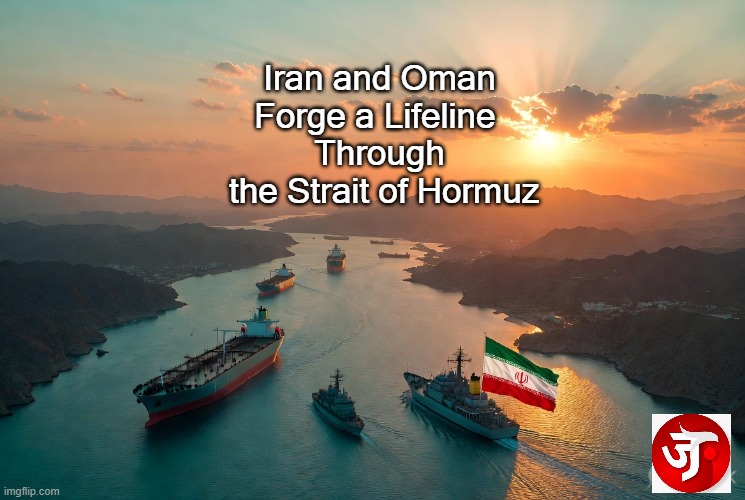
In the choking heat of the Persian Gulf, where supertankers once sliced through the waves like steel giants, the Strait of Hormuz has become a powder keg on water. This slender 21-nautical-mile throat that connects the oil-rich Persian Gulf to the vast Indian Ocean carries the lifeblood of the global economy. Nearly one-fifth of the world’s oil and a significant share of liquefied natural gas flow through its channels every day. One spark, one miscalculation, and the world feels the pain at the pump.
Yet amid recent escalations, blockades, and soaring energy prices that have rattled markets from New York to New Delhi, a measured voice of coordination has emerged. Iran’s Foreign Ministry spokesman, Esmaeil Baghaei, announced that Tehran and Muscat are actively developing a joint mechanism to guarantee safe navigation in these treacherous waters. As the two coastal states sharing the strait, Iran and Oman are coordinating to secure maritime transit for all – a diplomatic thread in a region frayed by conflict.
The Strait’s Deadly Allure
For decades, the Strait has been both artery and Achilles’ heel. Disruptions here don’t just delay shipments but trigger global shocks. Oil prices have spiked dramatically in recent months, pushing economies to the brink as traffic plummeted and seafarers faced peril.
Iran, with its long coastline dominating one side, has long asserted its strategic stake. Oman, the pragmatic sultanate, on the other hand, has historically played the role of quiet mediator, maintaining ties with all sides while upholding its reputation for stability. Their shared geography makes them natural partners in stewardship, even as larger powers circle with naval fleets and ultimatums.
The announcement signals more than routine diplomacy. In the wake of heightened tensions including naval incidents, reported attacks on vessels, and competing blockades, Iran and Oman are reportedly advancing a draft protocol for peacetime navigation. This could involve coordinated protocols for permits, monitoring, and safe passage, potentially allowing ships to utilise routes with assurances of non-interference. It underscores a core principle: the littoral states themselves must anchor security in these waters.
Why This Matters Now
Global trade hangs in the balance. With roughly 20 million barrels of oil passing daily in normal times, much of it bound for Asia, any sustained uncertainty ripples outward: higher fuel costs, strained supply chains, and anxious governments scrambling for alternatives that don’t exist at scale.
This joint effort arrives at a pivotal moment. Oman has been intensively engaged in facilitating safe passage arrangements, while Iranian officials emphasize that diplomacy, not escalation, holds the key. Foreign Minister Abbas Araghchi’s recent talks in Muscat highlighted shared responsibility for stability benefiting neighbors and the world.
Iran’s FM said that Iran and Oman are working on a joint mechanism to ensure safe navigation in the Strait of Hormuz, as the two coastal states coordinate to secure maritime transit in the vital waterway. He also said 184 students and 36 teachers were killed and 650 schools were damaged in US-Israeli attacks. He stressed Iran’s focus is on ending the war, not nuclear talks, adding the US response to Iran’s 14-point plan is under review.
For ship captains and energy traders, the news offers a glimmer of predictability. For regional analysts, it hints at de-escalation pathways, Oman’s neutral bridge-building meeting Iran’s insistence on sovereignty and security. Yet challenges remain: implementing any mechanism amid distrust, external military presences, and competing claims will test resolve.
A Narrow Path to Stability
The Strait of Hormuz has witnessed empires rise and fall, tankers burn, and markets quake. Today, it tests whether two neighbours can chart a course through a crisis. Iran’s spokesman framed the work as proactive coordination between coastal guardians. If successful, this joint mechanism could not only reopen vital lanes but also model how regional powers secure their own backyard free from endless outside interference.
As tankers idle and watches tick in ports from Fujairah to Bandar Abbas, the world waits. Safe shipping through Hormuz isn’t limited to oil, but is about averting a wider storm. In these narrow waters, diplomacy must navigate as skillfully as any vessel. The stakes? Nothing less than the steady pulse of global energy and safety over the narrow seas.