
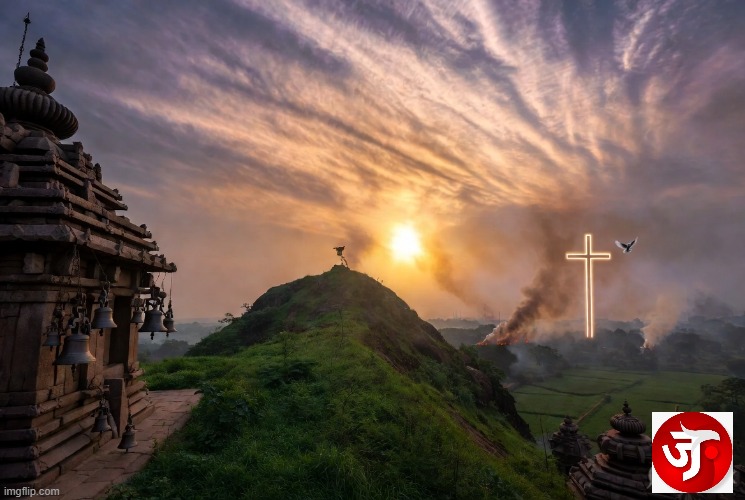
*Maya lived in Kalahandi, Odisha, where the land still whispered stories of ancient empires. This was the soil where Emperor Ashoka had once waged the brutal Kalinga War in 261 BC. The rivers of blood had moved him to renounce violence and embrace Buddhism . Yet centuries later, the same earth would drink fresh blood in the name of faith.
Born into a staunch Brahmin family, *Maya grew up to the sound of temple bells ringing at dawn and dusk. As the orange sun dipped behind the hills, her mother would light incense sticks, their sweet smoke curling through the house while a pandit chanted Sanskrit verses. Life was ordered, protected, and steeped in tradition. Then one evening, everything changed.
Maya watched a film on the life of Jesus. The story of a man who forgave His tormentors from the cross pierced her heart. She began reading the Bible in secret. When she finally declared her decision to follow Christ, her family erupted in fury. Conversion was betrayal. For a year, they argued, pleaded, and threatened. In the end, they asked her to leave.
Cast out from the only world she had known, *Maya wandered. She returned to Odisha and met a gentle Christian pastor. They married and built a simple life together. Their home echoed with prayer and laughter, especially after their son was born.
One quiet evening in 2008, as the family sat down to dinner, an urgent knock shattered the peace. A woman *Maya did not recognise stood panting at the door.
“Brother, one house needs prayers urgently. Someone is very sick. Please come.”
Her husband looked at *Maya. “Finish your meal. I’ll be back soon.”
She fed their six-month-old baby, who soon fell asleep in her arms – hours passed. The clock ticked louder in the silence. Night deepened, and her husband did not return.
At five the next morning, another knock came. *Maya opened the door expecting her husband. Instead, her neighbour stood there, eyes wide with terror.
“I am so sorry,” the woman gasped. “Last night, extremists gathered six men in a house, locked the door, and set it on fire. They are all dead… your husband too.”
The words landed like stones. *Maya stood frozen.
“You must run,” the neighbour urged. “Get out before they come for you and the child. I cannot keep you here – it is not safe for any of us.”
In a haze of shock, *Maya packed a small bag with shaking hands. She wrapped her baby tightly and fled into the darkness. Door after door closed in her face. “They will kill us too if they find you here,” people whispered.
She walked for hours until she reached a bus that would take her thirty-six kilometres away. On the road, extremists stopped the vehicle. They offered Prasad to every passenger, watching their faces closely. Those who refused, suspected Christians, were dragged out by their hair and beaten on the roadside. *Maya sat still, clutching her child. Somehow, they passed her by. She believed God had hidden her.
She reached another town and spent the night with a frightened Christian family. News trickled in: churches and homes were burning across the district. Mobs linked to Hindu extremist groups were rampaging. The spark had been the murder of Swami Lakshmanananda Saraswati, a revered figure. While Maoists were blamed for killing the Swami, the violence quickly turned into a targeted anti-Christian pogrom. Houses were torched, villages emptied. Official figures spoke of around thirty deaths, but many locals whispered of hundreds. Over seven hundred homes and nearly a hundred churches were destroyed. Thousands fled to relief camps set up by the state government.
*Maya’s world had collapsed overnight. Friends later offered to help her relocate to Bengaluru or other cities where life might be easier and safer. She refused. “This is my home,” she said quietly. “I will not let fear drive me away.”
Slowly, painfully, life began again. *Maya completed her studies. She reconciled with her family, who, in time, opened their hearts. She became a teacher in Kalahandi, shaping young minds in the same hills where she had once run for her life.
Her son, now eighteen in 2026, carries the quiet marks of those early days, lingering effects of malnourishment, but he is strong, loved, and growing. When *Maya falls ill, her family gathers around her just as they once gathered for evening puja.
Years after the flames, *Maya looks back and says without regret, “I have changed.”
She teaches her students not only letters and numbers, but also the harder lessons of pain, resilience, and the quiet power of letting go. In the land that once broke Ashoka’s heart and turned him toward peace, *Maya too chose the path that heals rather than destroys.
Forgiveness, she tells those who ask, is not forgetting. Maya has found her healing in forgiveness, because forgiveness is the best healing from all pain.
*Maya’s name has been changed to protect her privacy in a still sensitive region.