India Elections 2026: The Nation Holds Its Breath as EVMs Are Unsealed:
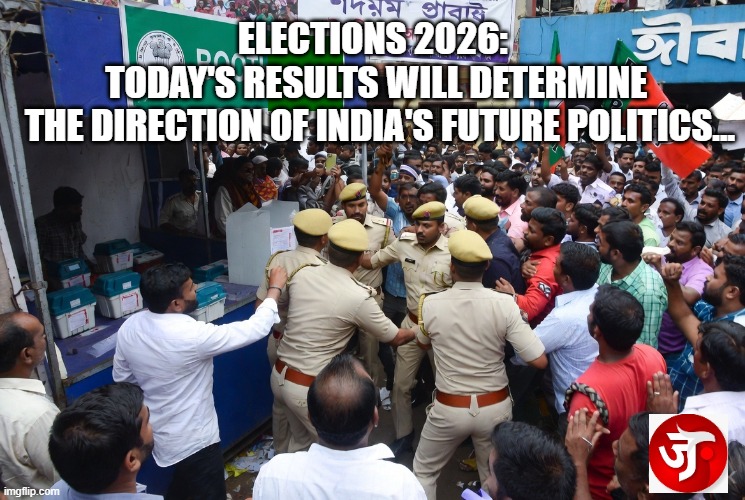
In a few hours, the electronic voting machines (EVMs) will be unsealed across Assam, Kerala, Tamil Nadu, West Bengal, and Puducherry. Counting begins at 8 AM on this pivotal Monday, May 4, 2026, and by evening, India will have a clearer picture of its political trajectory heading into the 2029 Lok Sabha polls.
This isn’t just another state election cycle. It’s a multi-state referendum that pits incumbents against challengers, tests the reach of national parties in regional strongholds, and could reshape alliances, chief ministerial ambitions, and the balance of power in Delhi. From the tea gardens of Assam to the bustling streets of Kolkata and Chennai, voters have spoken and now it’s time to count.
West Bengal (Bengal) has seen multiple allegations of voting irregularities during the 2026 Assembly elections, especially in phases around late April 2026. Claims come from both TMC and BJP sides, involving EVM tampering (e.g., tape on buttons), ballot box issues, proxy voting, violence, and voter list deletions. The Election Commission of India (ECI) has ordered repolls in affected areas like Falta (all booths) and some in Diamond Harbour due to confirmed irregularities.
Here are prominent examples circulating on social media, news, and X:
TMC’s CCTV Footage Alleging Ballot Tampering: TMC released footage showing that ballot boxes were allegedly opened without authorised party representatives (allegedly in collusion with the BJP/EC). This sparked protests ahead of May 4 counting.
Example: NewsX Live coverage with the clip – YouTube
EVM Button Taping in Falta (Diamond Harbour): Viral videos show tape allegedly placed over the BJP candidate’s symbol/button on EVM ballot units (e.g., Debipur Booth 177). BJP claimed this blocked votes; ECI probed and ordered repolls. TMC called it staged.
Clips widely shared on Instagram/X showing close-ups of the taped EVM.
Strong Room/Ballot Handling Footage: TMC-shared CCTV from a strong room showing activity around ballot boxes/EVMs, framed as “murder of democracy.”
Videos of violence, voter intimidation, EVM glitches, and chaos at booths (e.g., Chapra, Shantipur, Bhangar). Proxy voting or fake votes in past/present polls (older clips from panchayat/co-op elections also recirculate).
VVPAT slips found strewn near Madhyamgram.
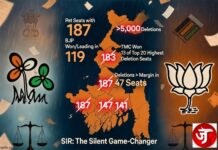
Despite a high turnout, controversy lurks with a record 91.5% turnout amid 91 lakh voter deletions via Special Intensive Revision (SIR), accused of targeting certain groups.
ECI dismissed many social media claims as fake but acted on specific complaints with repolls and probes.
Allegations are partisan: TMC points to BJP/EC, BJP to TMC workers.
The battleground is fierce: Some of the viral videos of have shaken the people, such as the few below:
The Battlegrounds: Five States, Endless Drama
West Bengal: The High-Stakes Thriller
Mamata Banerjee’s Trinamool Congress (TMC) is fighting for a fourth consecutive term amid strong anti-incumbency whispers, allegations of corruption, and a fierce challenge from the BJP. After jumping from a handful of seats to 77 in 2021, the BJP is eyeing a breakthrough or even power. Exit polls painted a nail-biting contest, with some projecting a tight race or slight edge to one side. The state’s polarised politics, combined with controversies over voter list revisions, has kept the entire nation glued. Will “Poriborton 2.0” happen, or will Didi hold the fort?
Tamil Nadu: Dravidian Pride Meets a New Disruptor
The traditional DMK vs. AIADMK duel faces a wildcard: Actor Vijay’s Tamilaga Vettri Kazhagam (TVK). Incumbent CM M.K. Stalin and the DMK-led alliance are pushing for continuity, while the AIADMK-NDA bloc hopes for a comeback. Exit polls suggest DMK holds an advantage, but TVK’s debut could fragment votes and rewrite the script in this 234-seat assembly. Tamil Nadu’s verdict will echo loudly in southern politics.
Assam: BJP’s Northeastern Fortress Under Test
CM Himanta Biswa Sarma’s BJP-led NDA seeks a third term. The party has consolidated power in the region, but Congress is mounting a spirited fight. With 126 seats at stake, a strong showing here would reinforce the BJP’s dominance in the Northeast.
Kerala: The Alternating Power Cycle
Will the Left Democratic Front (LDF) break Kerala’s tradition of alternating governments, or will the UDF return? The BJP-NDA is also expanding its footprint in God’s Own Country, making this 140-seat contest a fascinating three-cornered fight.
Puducherry: Small but Significant
The NDA, led by the All India N.R. Congress, aims to retain power in this 30-seat UT. It’s a litmus test for local alliances and national trends.
Why Today’s Results Matter for India’s Future
These elections come at a crucial juncture. The BJP, in power at the Centre since 2014, faces its first major state-level test after the 2024 Lok Sabha outcome. Strong gains, especially in opposition strongholds like Bengal or Tamil Nadu, would boost momentum toward 2029. Conversely, setbacks could embolden the INDIA bloc and regional satraps.
For opposition parties, victories would signal resilience and provide crucial bargaining power in national politics. Newer forces like TVK highlight how celebrity appeal and issue-based campaigns are shaking up traditional equations.
Beyond politics, these results will influence policy directions on federalism, economic development, welfare schemes, and social issues across diverse linguistic and cultural landscapes. High voter turnout in many phases underscores the vibrancy of Indian democracy, millions queued up despite heat, controversies, and intense campaigning.
The a significant BJP victory in the 2026 state elections would likely accelerate and broaden the push towards Hindutva-oriented policies and cultural nationalism, though not in a vacuum.
Core Ideology and Track Record
The BJP is the political arm of the broader Sangh Parivar, rooted in Hindutva, a Hindu nationalist ideology emphasising cultural and civilizational identity, often framed as “cultural nationalism” rather than as a theocracy. Core elements include promoting Hindu symbols, temple politics (e.g., Ram Temple precedent), Uniform Civil Code pushes, anti-conversion laws, cow protection, and narratives around “decolonisation” and Hindu consolidation.
Under Modi since 2014, the party has blended this with governance, welfare (“welfarism”), and development. Even in the post-2024 coalition phase, there has been little moderation on the ideological front. State-level wins have historically allowed experimentation with Hindutva planks (e.g., in Uttar Pradesh, Madhya Pradesh, or Assam under Himanta Biswa Sarma, with its mix of polarisation and targeted schemes).
What These Specific Elections Mean
These 2026 polls (Assam, West Bengal, Tamil Nadu, Kerala, Puducherry) are seen by analysts as a direct test of Hindutva’s limits and reach beyond the Hindi heartland:
Assam: BJP already uses a “cocktail of Hindutva and welfarism”, anti-immigrant (often targeting Bengali Muslims) rhetoric alongside women-focused schemes. A win here reinforces majoritarian consolidation.556f49
West Bengal: A breakthrough (from 77 seats in 2021) would be massive. BJP campaigns blend “Jai Shri Ram,” Durga/Kali invocations, Bengali pride, and security narratives. Victory signals Hindu consolidation can crack eastern strongholds.
South (TN, Kerala): Gains here would mark deeper penetration into Dravidian/secular-leaning regions, where Hindutva has been resisted. Even modest success normalizes the ideology further.
Strong results would:
Boost momentum toward 2029 Lok Sabha polls.
Give more leverage for ideological projects at state and national levels (e.g., temple endowments, cultural policies, countering “appeasement”).
Encourage Hindu voter consolidation as a winning formula, as seen in exit poll chatter and campaigns.
Nuances and Limits
Not automatic radical shift: BJP often calibrates – hardcore Hindutva in core areas, blended with development and local identity elsewhere. Coalition compulsions (post-2024) and state-specific realities (linguistic pride, minorities 27-46% in these states) act as brakes.
Opposition adaptation: Parties like TMC and Congress are now doing Hindu outreach (temples, festivals) to counter. Hindutva’s grammar is spreading even among rivals.
Voter priorities: Many analyses note elections hinge on anti-incumbency, welfare, jobs, and local issues as much as pure ideology. Pure “saffron” without delivery has limits.
In short: A big BJP win today would validate and energize the Hindutva project, giving it fresh wind in diverse regions and likely leading to bolder cultural-nationalist moves in governance. It strengthens the long-term remaking of India’s political-cultural discourse toward Hindu majoritarianism. However, Indian politics remains messy – federalism, economics, and voter pragmatism will continue shaping how far and fast it goes. Results unfolding now will tell the immediate story.
Whatever the outcome, one thing is certain: India’s democracy remains robust, noisy, and full of surprises. Today’s unsealing of EVMs isn’t the end but the beginning of a new chapter in the world’s largest democracy.
Stay tuned. The results will unfold hour by hour, constituency by constituency. India’s future politics hangs in the balance, and the nation is watching.
Jai Hind.