Trump’s Blunt Rejection of Iran’s Overture: Maximum Pressure 2.0 or Calculated Brinkmanship?
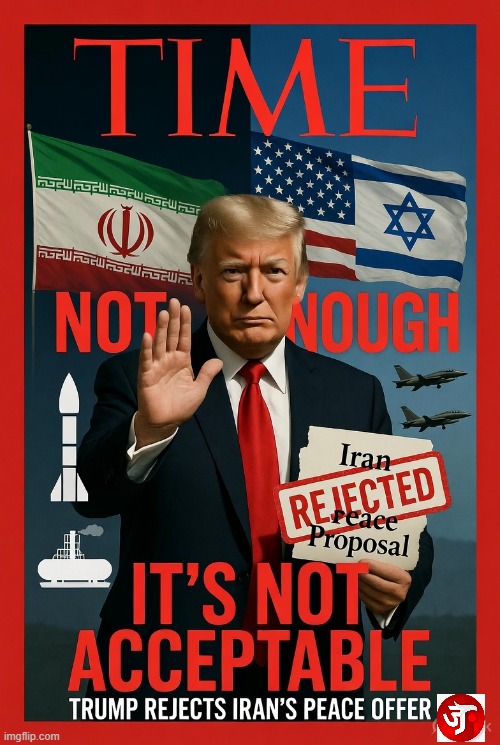
Tel Aviv, May 4, 2026 – In a terse telephone interview with Kan News correspondent Nathan Guttman, U.S. President Donald Trump delivered a characteristically unequivocal verdict on Iran’s latest attempt to broker an end to the widening regional war: “It’s not acceptable to me. I’ve studied it, I’ve studied everything – it’s not acceptable.”
The dismissal, reported first by The Times of Israel, underscores a familiar Trumpian posture, one that blends personal deal-making bravado with an insistence on negotiating only from a position of perceived dominance. Trump went further: the ongoing military campaign against Iranian forces and proxies is “going great,” he said. While Tehran “wants to make a deal,” the American president remains “not satisfied with what they’ve offered.” He declined to specify the precise sticking points, leaving analysts and diplomats to read between the lines of strategic ambiguity.
Key Reasons for Rejection:
Insufficient Nuclear Guarantees
The proposal reportedly offered only temporary pauses or limited inspections on Iran’s nuclear program in exchange for immediate sanctions relief and an end to the naval blockade. Trump has long insisted on verifiable, permanent dismantlement (or severe rollback) of Iran’s enrichment capabilities – far beyond what the 2015 JCPOA provided. Anything short of that was viewed as a temporary breathing room for Tehran to advance its program later.
Maintaining Maximum Leverage
With the U.S.-Israeli military campaign reportedly degrading Iranian proxy networks and tightening the economic stranglehold via the Strait of Hormuz blockade, Trump believed he held the upper hand. Accepting a weak deal at that moment would have squandered the pressure that had forced Iran to the table in the first place. His philosophy: strike when the enemy is weak, not when they’re offering minimal concessions.
Domestic and Regional Credibility
Trump has framed the conflict as a decisive stand against Iran’s nuclear threat and regional aggression. A premature or overly generous deal risked making him look weak to his base, to Israel, and to Gulf allies. His public urging for Netanyahu’s pardon and emphasis on wartime leadership further signal that he sees this as a defining moment that cannot end in half-measures.
In short, Trump rejected what he saw as a bad peace. From his perspective, Iran’s proposal was an attempt to relieve pressure without making the irreversible concessions Washington demands on the nuclear file, ballistic missiles, and regional proxies.
Whether this hardline stance ultimately yields a stronger deal or proves to be a costly miscalculation remains the central question of the ongoing conflict.
The Backdrop: A War of Blockades, Missiles, and Oil
The context is stark. By early May 2026, the United States and Israel are engaged in a direct, if still limited, confrontation with Iran that has already cost Washington roughly $25 billion. A U.S.-led naval blockade has throttled Iranian oil exports and commercial shipping through the Strait of Hormuz, sending global crude prices spiking toward $126 per barrel. Iranian missile barrages and proxy attacks via Hezbollah, the Houthis, and Shiite militias have been met with sustained Israeli and American strikes. Tehran, feeling the economic noose tighten, has floated multiple proposals that reportedly channelled in part through Pakistani intermediaries, that seemingly prioritise immediate sanctions relief and lifting of the blockade in exchange for a temporary deferral of nuclear negotiations.
Trump’s rejection signals that Washington will not settle for tactical pauses. Core U.S. demands appear to centre on verifiable, permanent restraints on Iran’s nuclear program -a red line that echoes the 2018 withdrawal from the JCPOA and the subsequent “maximum pressure” campaign. By declaring the Iranian offer insufficient after personal review, Trump reinforces his long-standing narrative: only maximum leverage extracts meaningful concessions from adversarial regimes.
Trump’s Approval Ratings Slide as Iran Conflict Drags On
Washington, May 4, 2026, which is just weeks after launching direct military action against Iran, President Donald Trump is watching his political honeymoon sour amid mounting public frustration over the escalating costs of war.
According to a new Reuters/Ipsos poll released Monday, Trump’s approval rating has fallen to 42%, down eight points from his post-inauguration high. Disapproval now stands at 54%. The sharpest declines are among independents and working-class voters in swing states, many of whom backed Trump precisely for his promises of peace through strength and lower energy prices.
The primary culprit: pain at the pump. National average gasoline prices have surged to $5.78 per gallon, with some California stations topping $7. Supply chain disruptions caused by the U.S.-led naval blockade in the Strait of Hormuz have also driven up food and shipping costs, stoking inflation fears just as families were beginning to feel relief.
“I voted for Trump to end the endless wars, not start a new one,” said 48-year-old Ohio truck driver Mike Harlan. “Now I’m paying double at the diesel pump and worried my son might get called up. This wasn’t the deal.” A senior GOP strategist admitted anonymously, “The ‘maximum pressure’ message sold well on the campaign trail, but the sticker shock at the pump is starting to hurt.”
Republican strategists are growing nervous. While Trump’s base remains largely supportive, viewing the operation as a necessary stand against Iran’s nuclear ambitions, internal polling shows erosion among suburban women and Midwestern moderates. Focus groups repeatedly cite “war fatigue” and economic anxiety as top concerns.
The White House insists the campaign is succeeding. Trump told reporters over the weekend that “the Iranians are hurting far more than we are” and predicted a “fantastic deal” soon. Yet senior officials privately acknowledge that prolonged fighting without a clear exit strategy risks turning a foreign policy win into a domestic liability heading into the 2026 midterms.
With oil prices hovering near $125 a barrel and no immediate diplomatic breakthrough in sight, the question hanging over the administration is whether Trump’s trademark toughness will continue to rally voters, or whether the mounting costs of confrontation will erode the very coalition that returned him to power.
The Trump administration’s Iran campaign, launched with characteristic bravado and promises of quick victory through “maximum pressure,” now stands as a strategic and political failure. What began as a calculated show of strength has devolved into a draining war of attrition, delivering neither regime change, a denuclearized Iran, nor the “fantastic deal” repeatedly touted by the president.
Militarily, Iran’s nuclear program has not been dismantled but only delayed at enormous expense. Economically, the United States has absorbed punishing blows: oil prices remain elevated, inflation has reaccelerated, and American consumers are bearing the daily cost at the gas pump and grocery store. Far from the decisive win projected in early 2026, the Iran war has become yet another Middle Eastern quagmire – expensive, inconclusive, and politically toxic.
The ultimate verdict is harsh but clear: what Donald Trump sold as strength has revealed itself as costly overreach. The bill, measured in blood, treasure, and lost public confidence, continues to mount. So, did Trump make an unwise decision or is it a masterstroke?