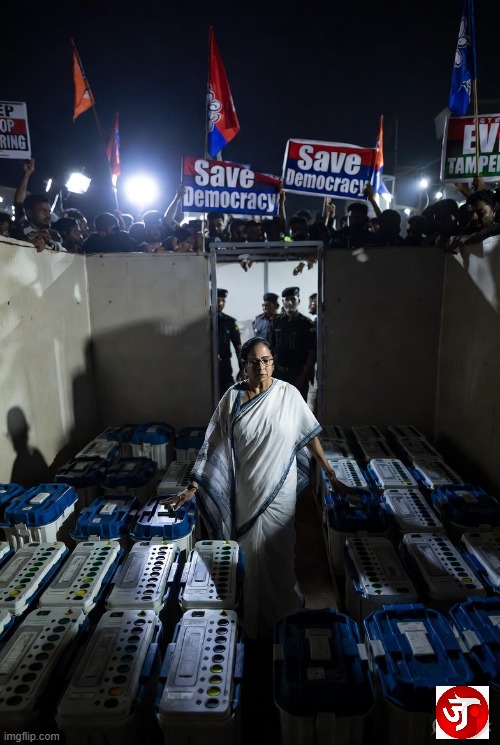
Kolkata, May 1: High drama unfolded in West Bengal late Thursday night as Chief Minister Mamata Banerjee spent several hours inside a strongroom amid fears of EVM tampering, just 48 hours before vote counting for the Assembly elections.
Following the conclusion of the second and final phase of polling, the Trinamool Congress (TMC) accused the BJP and the Election Commission of colluding to “open ballot boxes without the presence of any relevant party stakeholders.” The party described the alleged move as “the murder of democracy in broad daylight” and “looting democracy.”
TMC supporters staged a sit-in protest outside the counting centre, triggering clashes with BJP workers and raising political temperatures across the state.
In an official statement on X, the All India Trinamool Congress (@AITCofficial) said BJP had “imported operatives” to swarm the area near Netaji Indoor Stadium and claimed Mamata Banerjee was personally “guarding the front lines herself.” The party warned that any attempt to tamper with EVMs or “heist the people’s mandate” would face strong resistance, while stressing it was choosing peace out of respect for the law.
The allegations have intensified an already charged atmosphere ahead of the crucial results:
West Bengal’s elections have long been known for their intensity, but the 2026 Assembly polls stand out as particularly charged and dramatic. Polling for all 294 seats concluded on April 29 with a record 90% turnout, and results are due on May 4. Here’s why tensions are running sky-high:
There’s a bitter TMC versus BJP rivalry, because after 15 years in power, Mamata Banerjee’s Trinamool Congress (TMC) faces strong anti-incumbency. The BJP, led by a high-voltage campaign from PM Modi and Amit Shah, is aggressively pushing to dislodge her, framing the contest as a battle to “save” or “rescue” Bengal from alleged TMC misrule, corruption, and “appeasement.” TMC, in turn, accuses the BJP of divisive politics, trying to “dismantle” Bengal’s identity, and misusing central agencies and forces.
Bengal has a deep-rooted culture of political clashes, inherited from earlier eras of Left rule and now amplified by the TMC-BJP turf war. This election saw multiple reports of violence, vandalism, booth-level intimidation, and clashes during both phases of voting. Central forces were deployed in large numbers, yet allegations of bias and excess persist from both sides.
EVM tampering allegations and midnight drama is the latest flashpoint. TMC has accused the BJP and Election Commission of colluding to open ballot boxes/EVMs without proper party presence, calling it “murder of democracy.” Mamata Banerjee herself spent hours inside a strongroom in Kolkata on the night of April 30, vowing a “life and death” fight against any manipulation.
Supporters staged sit-ins, leading to further clashes. The EC has rejected the claims, stating procedures were followed and machines are secure, but trust is low.
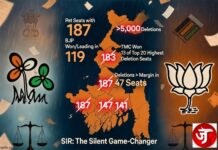
The voter list controversy (SIR) with the Special Intensive Revision of electoral rolls removed or questioned many names, which TMC calls a deliberate attempt to disenfranchise its supporters is stirring unrest. BJP defends it as cleaning up bogus votes.
Most exit polls project a strong showing for the BJP (potentially crossing the majority), which TMC dismisses. With power, pride, and Bengal’s future at stake, both sides are in full combat mode and rhetoric is sharp, accusations fly daily, and every incident gets amplified.
In short, a potent mix of incumbency fatigue, fierce ideological and personal battles (Mamata vs the Modi-Shah ecosystem), the legacy of street-level politics, and last-minute controversies has made these elections exceptionally “feisty.” The next few days until counting will likely see more heat. Bengal politics rarely stays calm – this time, it’s boiling.