
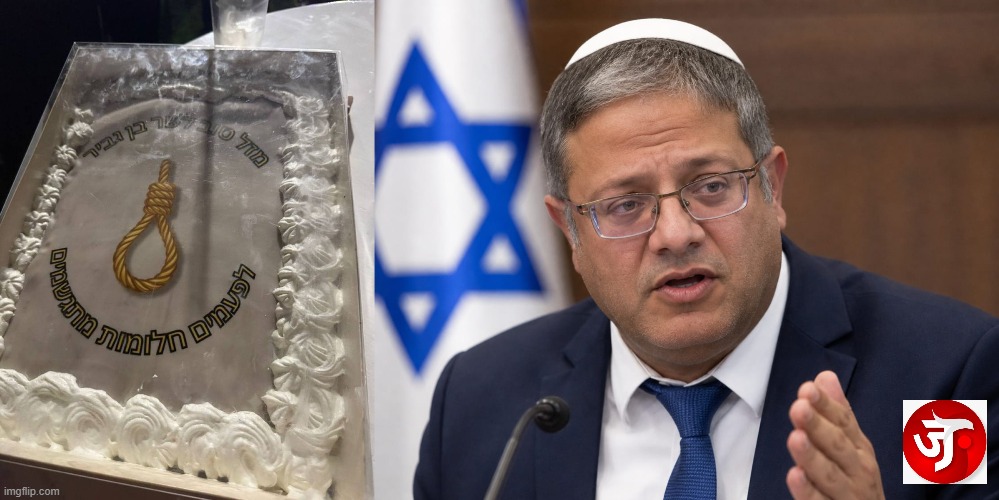
On May 2, 2026, Israel’s far-right National Security Minister Itamar Ben-Gvir celebrated his 50th birthday in the southern community of Emunim with a gathering that blended personal milestone, political power display, and provocative symbolism. Senior police commanders, prison service officials, ministers including Israel Katz and Shlomo Karhi, and prominent ultranationalist activists attended the outdoor party. Yet the event’s defining images, widely circulated on social media, were the cakes.
One cake featured a golden noose with the inscription: “Congratulations Minister Ben-Gvir. Sometimes dreams come true.” Another three-tier creation displayed pistols aimed at a map encompassing Israel, Gaza, and the West Bank. The imagery directly referenced the controversial “Death Penalty for Terrorists Law” that Ben-Gvir’s Otzma Yehudit party championed and the Knesset passed in March 2026. The law mandates hanging for Palestinians convicted in military or civilian courts of lethal terrorist attacks against Israelis, while drawing sharp criticism for its de facto discriminatory application.
For Ben-Gvir’s supporters, the celebration represented vindication. Long a vocal advocate for maximum penalties and Jewish sovereignty, he has worn a small noose pin as a personal signature. The birthday cakes framed the death penalty law as a fulfilled ideological promise amid ongoing security threats. The presence of top law enforcement figures underscored his influence over the security apparatus he oversees.
Critics saw something darker. Former Prime Minister Naftali Bennett condemned the attendance of senior police officers, vowing to fire public servants who politicize their roles if he returns to power. “Naftali has no friends,” Ben-Gvir retorted dismissively. International voices joined the backlash. Journalist Piers Morgan called the display simply “Disgusting,” capturing a broader unease that even a birthday, meant to celebrate life, had been turned into a macabre statement about death.
The episode reveals deeper fractures in Israeli society. To Ben-Gvir and his base, the noose symbolizes deterrence, justice for victims of terror, and unapologetic strength after years of violence, including the October 7 attacks. To opponents, it signals extremism, erosion of democratic norms, and a willingness to embrace symbolism that many Israelis and allies find morally jarring or politically reckless.
In a nation still grappling with war, hostages, and existential threats, Ben-Gvir’s birthday party became more than a celebration. It served as a stark reminder of how personal milestones, legal victories, and provocative theater now intertwine in Israel’s polarized politics, where even cake can become a battleground for competing visions of security, morality, and the future.